The Write Stuff

Updated: Nov 11, 2025
How can we set students up for writing success?
Writing can seem like a simple task from the outside. You think of a sentence, and then you write it down. The fact is that this task feels simple for many of us because we have practiced enough to make most steps automatic. Let’s take the simple sentence “Call Mom.” How many different steps do students have to go through to write it? I just counted 27. This is why our goal for young writers is to build automaticity. To get through 27 steps, some of them need to be automatic.
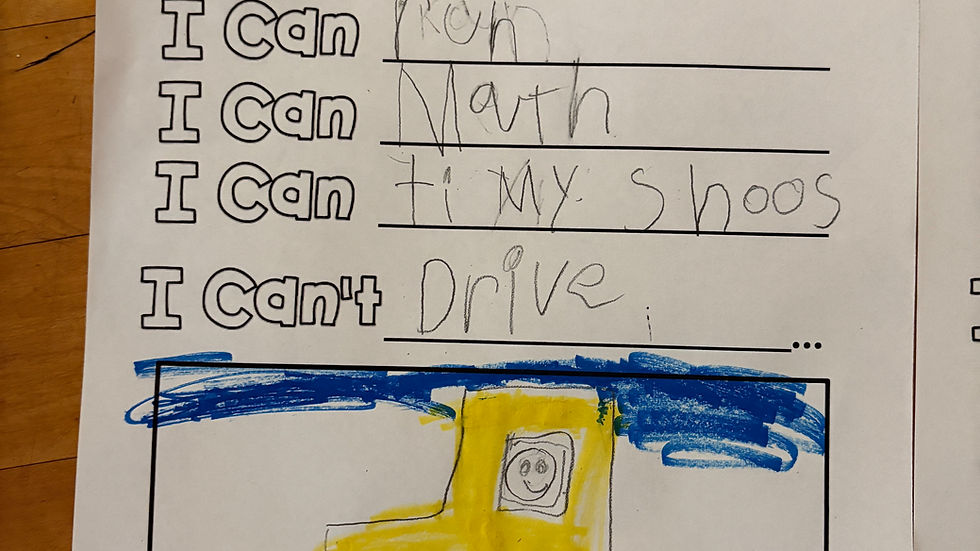
These are some of our earliest steps toward automaticity.
Building Confidence in Writing
Build confidence writing both uppercase and lowercase letters.
Build automaticity matching letters to their most common sounds.
Break sentences into words and words into sounds.
Writing at Home
Learning to write takes time and patience. If you want to practice at home, it should be low-pressure and fun. Here are some ideas:
Draw, color, and cut - We need those hands to be strong and nimble!
Break it down - Stickers, stamps, and magnets are great for practicing writing without handwriting.
Embrace imperfection - Spelling and handwriting don’t need to be perfect.
Writing at School
Each week at school, students practice new “red words.” Red words are some of the most common words in English, and they don’t follow our spelling rules. For example, if English made any sense, “of” would be spelled “uv.” These words just have to be memorized.
We also practice dictation, asking students to write simple words and sentences using words and concepts that they already know. This allows students to practice sounding out words to spell, handwriting, and capitalization without having to think up sentences that use only words they can spell.
Finally, we write across the curriculum, encouraging students to write or draw what they have learned during class meetings and project work. This allows students to experiment with expressing their ideas in writing at whatever level they are ready for, from labeling drawings to writing in complete sentences.
Make Writing Fun
Writing doesn't have to feel like homework. Find authentic opportunities to write. Your child can help you write a grocery list, write a note to a friend, or illustrate a comic book. Remember to celebrate the attempt, not aim for perfection. When we celebrate small victories, we help build confidence. Positive reinforcement encourages kids to keep writing!
Conclusion
In conclusion, setting students up for writing success involves building their confidence, creating a supportive environment, and encouraging regular practice. By focusing on automaticity and providing various opportunities for writing, we can help young learners thrive. Remember, writing is a journey, and every step counts. Let's celebrate the progress they make along the way!
By fostering a love for writing, we empower students to express themselves and share their unique voices with the world. Writing is a skill that will serve them well throughout their lives, and with our support, they will become confident, capable writers.


Comments